Test Engineering. Failure Analysis. Answers.
|


Full 360° Internal Visualization
Unlike standard 2D X-ray inspection, CT scanning captures thousands of radiographic images while rotating the sample through a full 360° reconstruction. The result is a high-resolution volumetric model that can be digitally sliced, rotated, measured, analyzed, and inspected layer by layer.
Translation: You stop guessing.
CT scanning allows engineers to identify internal defects, dimensional issues, material inconsistencies, assembly concerns, and hidden failures that would otherwise require destructive analysis — if they could be found at all.
Precision Beyond the Surface
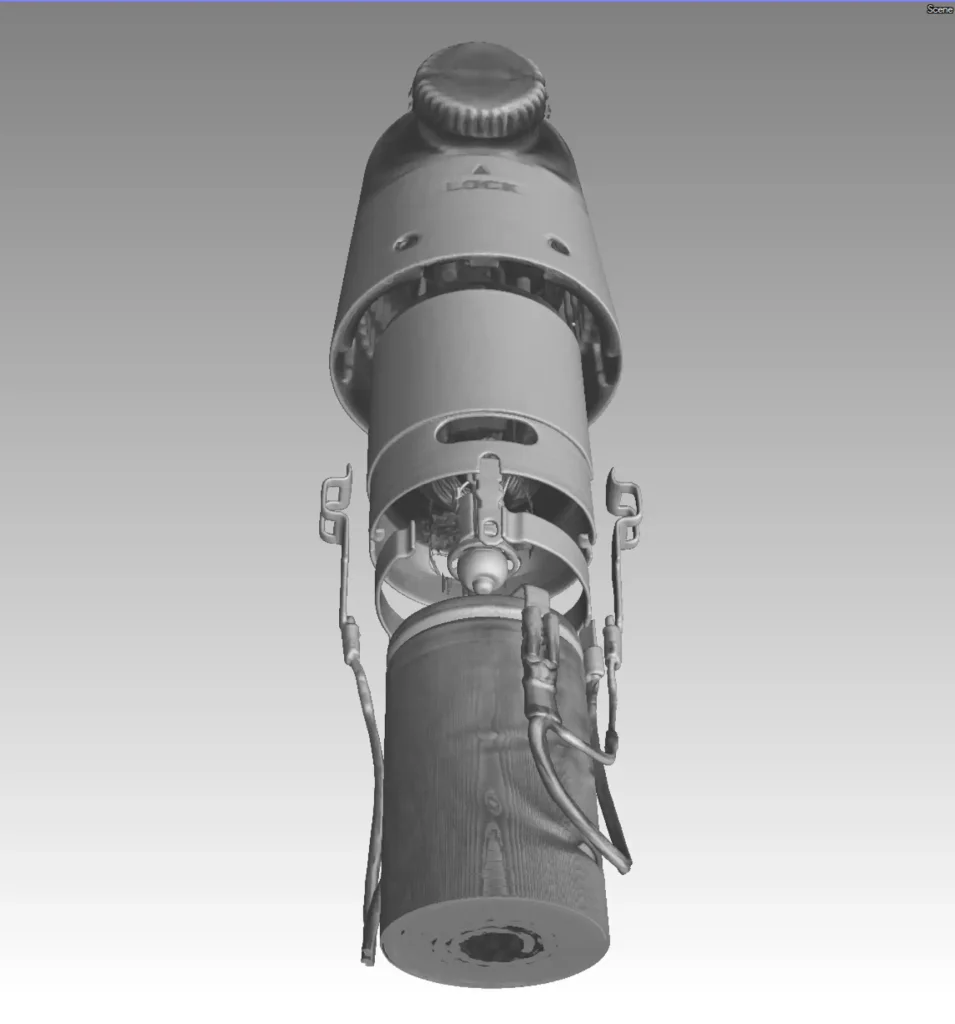
Even simple tools become surprisingly complex under CT scanning.
This scan reveals the internal geometry, material density variations, hidden fasteners, and assembly construction of a standard screwdriver — all without disassembly. CT scanning allows engineers to inspect internal features, verify manufacturing consistency, and analyze component relationships in full 3D detail.
Because “looks fine from the outside” isn’t always enough.
Precision Beyond the Surface
Even simple tools become surprisingly complex under CT scanning.
This scan reveals the internal geometry, material density variations, hidden fasteners, and assembly construction of a standard screwdriver — all without disassembly. CT scanning allows engineers to inspect internal features, verify manufacturing consistency, and analyze component relationships in full 3D detail.
Because “looks fine from the outside” isn’t always enough.
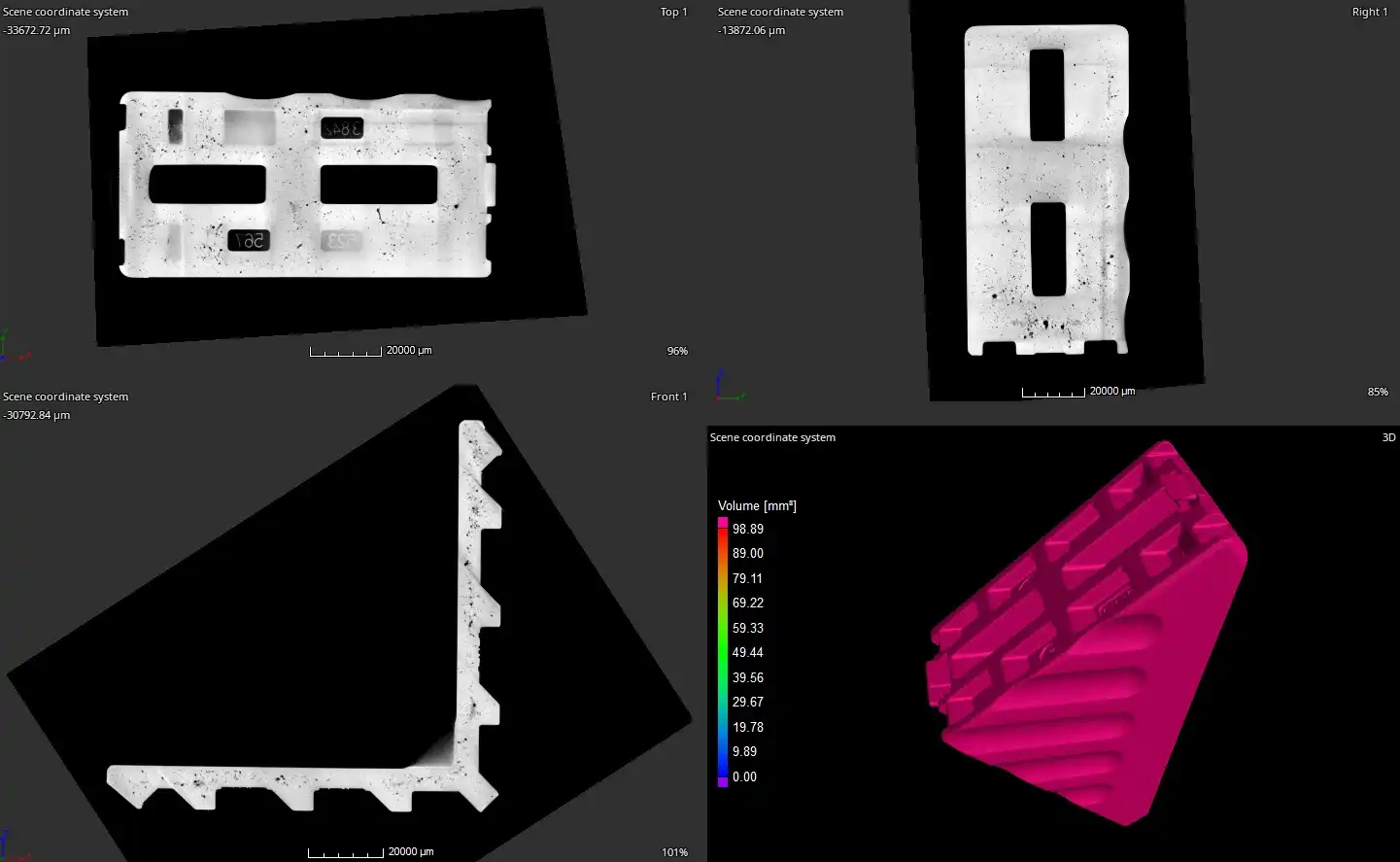
Porosity Hides. CT Finds It.
Cast components can conceal internal voids, inclusions, shrinkage, and structural inconsistencies that traditional inspection methods may miss entirely.
CT scanning allows engineers to evaluate internal integrity non-destructively, helping identify defects before they become field failures, warranty claims, or expensive surprises during machining or assembly.
The outside surface only tells part of the story.
Finding Failures Before They Spread
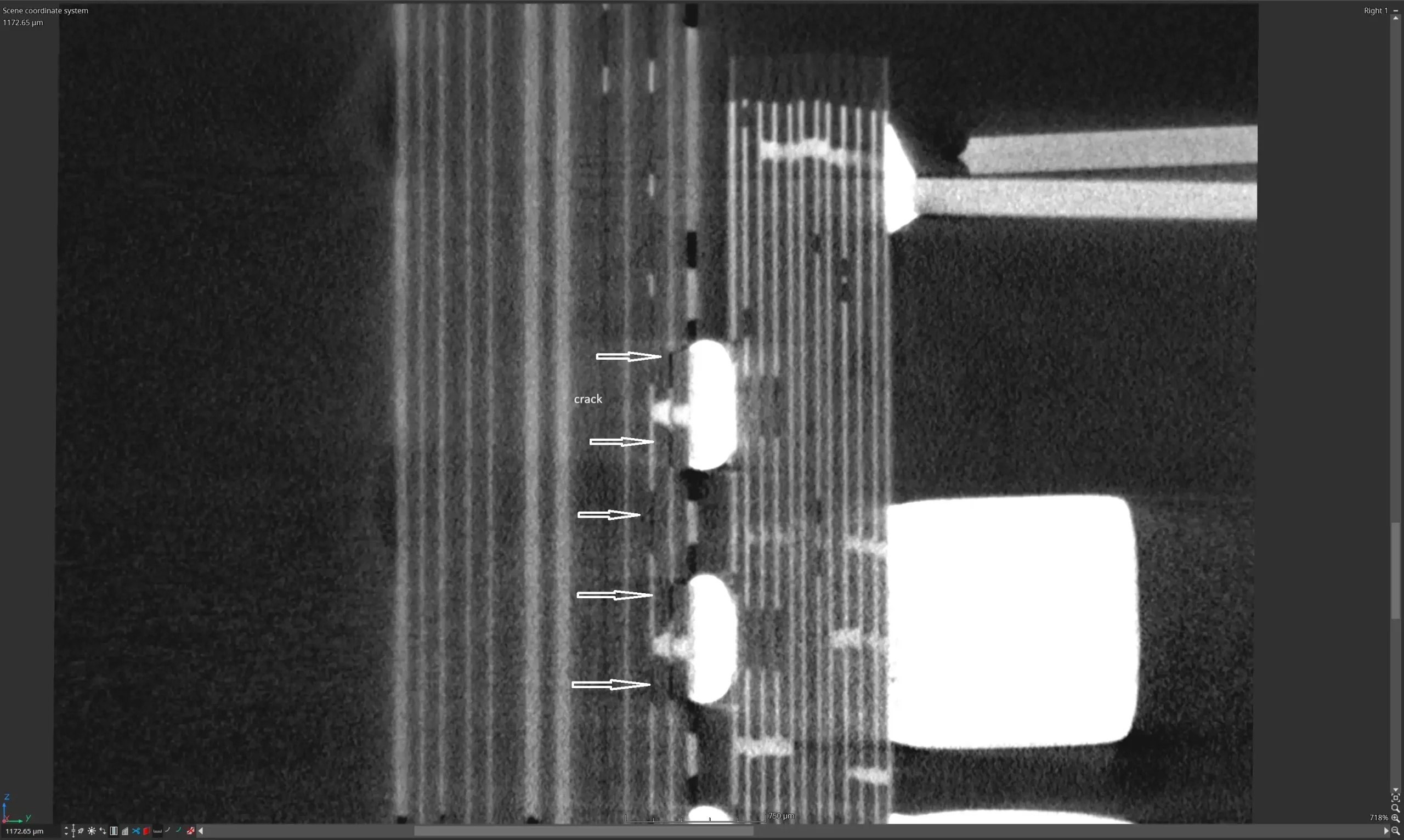
Cracks and delamination often begin beneath the surface long before they become visible externally.
Using high-resolution CT reconstruction, Datest can isolate internal fractures, material separation, bond failures, and structural defects without cutting or destroying the sample. This allows engineers to evaluate the severity, origin, and propagation path of failures with exceptional clarity.
Sometimes the failure isn’t where you think it is.
Finding Failures Before They Spread
Cracks and delamination often begin beneath the surface long before they become visible externally.
Using high-resolution CT reconstruction, Datest can isolate internal fractures, material separation, bond failures, and structural defects without cutting or destroying the sample. This allows engineers to evaluate the severity, origin, and propagation path of failures with exceptional clarity.
Sometimes the failure isn’t where you think it is.
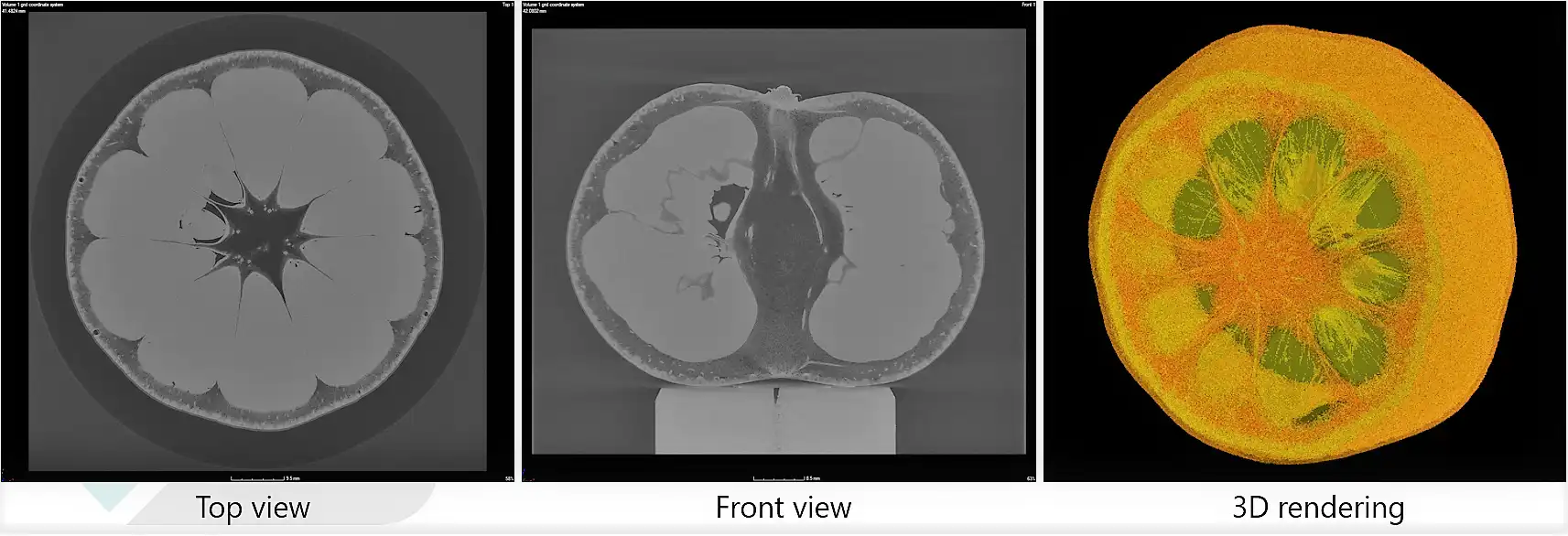
Yes. We Scanned a Tangerine
Because CT scanning doesn’t care whether it’s aerospace hardware, a PCB assembly, or citrus.
This scan demonstrates the incredible level of internal detail CT technology can capture — revealing segmentation, density variation, moisture distribution, and internal structure in full 3D without peeling a single layer.
Also, honestly… it looked cool.

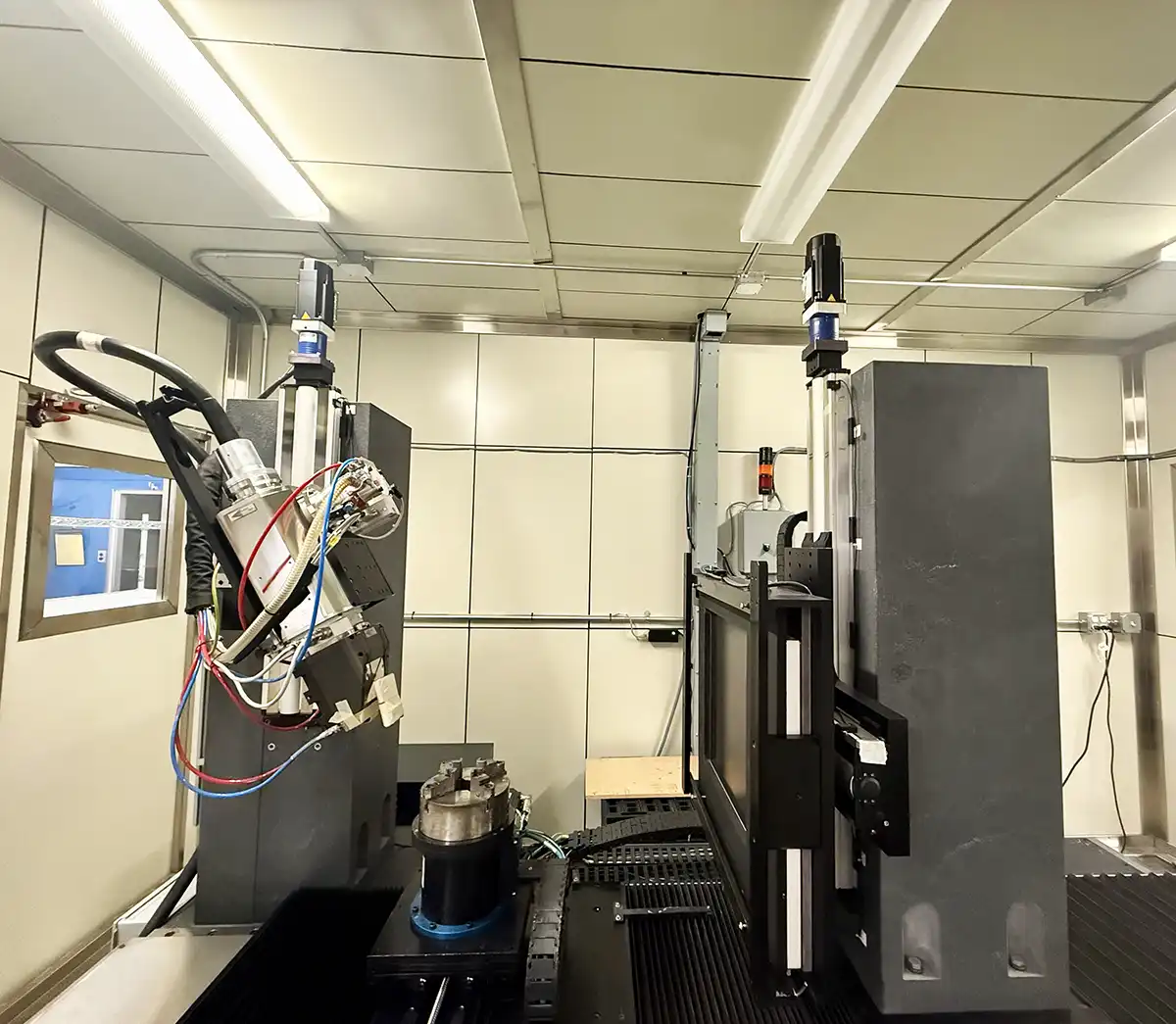
VJ Technologies Microfocus CT System
Not Just for Electronics
Yes, Datest is deeply rooted in electronics testing and failure analysis. But CT scanning opens the door to much broader applications — from industrial castings and composite structures to additive manufacturing and material science projects.
If it has internal structure, density variation, hidden geometry, or potential defects:
We can probably scan it.
And if we can’t?
We’ll tell you that too.